Week 76: Sweet spot
A busy week! Let’s jump right to it.
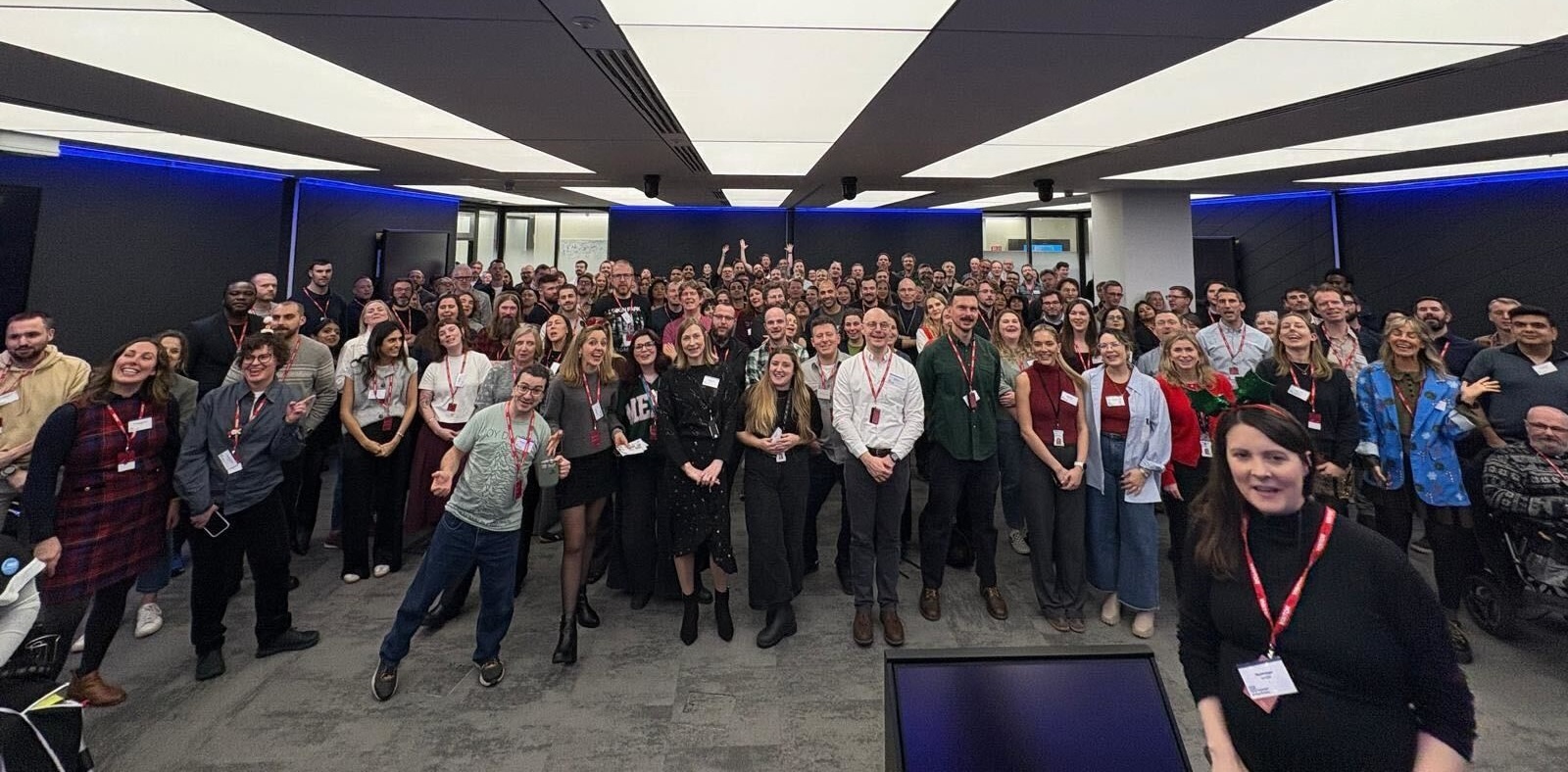
DPSP winter event
We had our now-traditional NHS digital prevention services (DPSP) winter event this week. After being heavily involved in organising our vaccinations event in November, I was able to relax and enjoy this one as a participant.
The event had a good mix of both external and internal speakers.
The morning keynote was from Sam Burrows, Chief Executive of NHS Frimley (an integrated care board or ICB). He spoke about their impressive partnership working across an incredibly complex panopoly of organisations, including councils, foundation trusts, ambulance services, care partnerships and voluntary organisations. Getting all those people together meant building trust, and sharing data between them meant overcoming technical and legal challenges.
My ears really pricked up though when he spoke about the tension between national services and their local needs. He mentioned their frustration when the centre takes a paternalistic we-know-best approach, and tries to impose a cookie-cutter service on them which doesn’t work when they take it out locally. Instead of ‘unthinking compliance’, they have sometimes said no, but always when demonstrating why, and showing a different way.
Sam also acknowledged that we can’t allow infinite variation between areas, and that there is also a huge challenge with geographic disparities in access to health services. Instead we have to find the sweet spot in having national services which have the right level of flexibility in the right areas. I’d agree with all this - but of course the devil is in the detail.
In the afternoon there was a festival format, with different presentations in different rooms. I opted to attend these talks from other internal teams:
- an update from the HomeTest team, who are building a platform for the ordering and sending of home test kits
- a demo (with great roleplaying acting) from the Manage vaccinations in schools service, showing how parental consent is requested but also how children can be assessed for Gillick competence and consent for themselves
- a hands-on mobile demo of an alpha prototype from the Lung cancer risk check team
I also helped to run a session showing NHS Record a vaccination, where we asked for volunteers to play both patients and the clinician, demonstrating how the digital service can be successfully used even with no prior training or guidance.
The day ended with the traditional quiz (my team did not win), and an evening social.
Card sorting user feedback
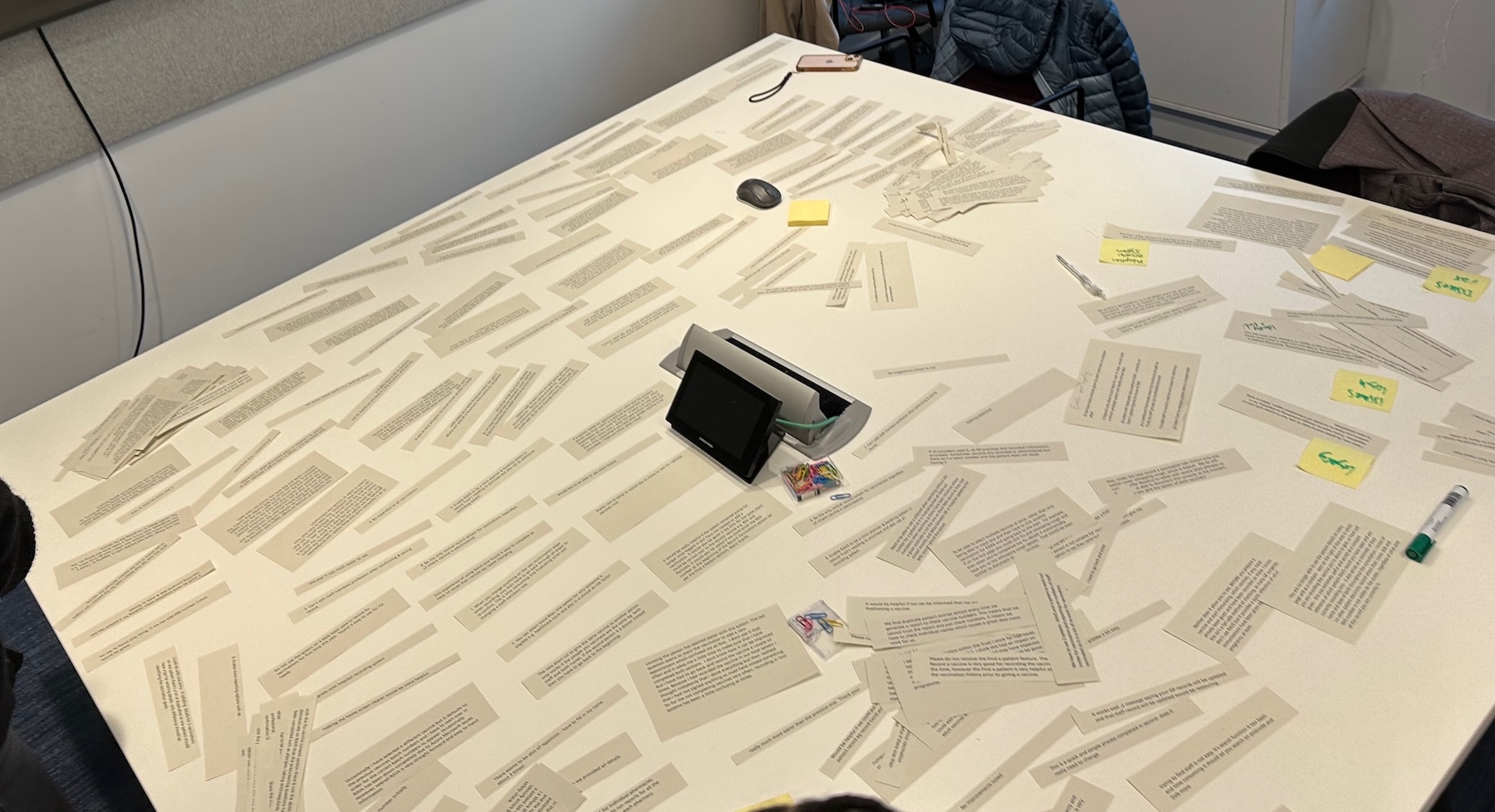
We recently sent out a survey to all users of Record a vaccination, and got over 1,000 responses. Mostly it contained closed questions, but around half also left a free text response.
To analyse these, Anna and I decided to print them all out (92 pages of A4!) and slice them up into individual comments. We then reviewed them as a team, grouping them into piles like giant game of snap. It was chaotic but fun.
For colleagues who couldn’t make to the office I also created a digital whiteboard version on Mural. This didn’t get the same level of engagement. Some things really are more easily done in-person.
Reading the comments was like being exposed to a firehose of user feedback. Between those offering praise (yay!) and those filled with grumbling complaints (boo) were hundreds of detailed, thoughtful suggestions for improvement. We’ll review and prioritise these over the coming weeks and months.
The organisation-location continuum
One philosophical-design question I’ve been slowly grappling with this year is the difference between “organisations” and “locations”.
You’d think there would be a distinction between these two concepts, but in the NHS it’s more like the space-time continuum with a big blurry space in the middle.
Our data sources routinely contain a blend of the two, and whilst at first this seems like a complete mess, it’s also understandable. A maternity or oncology department in a hospital might well be a physical floor or wing, but it also represents a team of people, and sometimes that team might be working in other locations.
Pharmacies are similar, being both physical stores (except when they’re mail order) and independent organisations (except when they’re part of a bigger group).
In some contexts the blurriness is fine, but in others it can lead to all kinds of confusion. I’m not yet sure how best we can resolve this.
Imposter syndrome
Liz Glidewell led our last DPSP user-centred design community call of this year, with a very thoughtful and insightful session on imposter syndrome. It left space for people to share their own experiences, whilst also offering expert analysis of the phenomenon and some practical tips for dealing with it.
I left the session with a renewed sense of how important and delicate it is for us all to build a supportive community of practice. We’ve come a long way on this in the past year, but there’s plenty more still to do.
Links
- Design with, not for users by Sakshi Lamba Jhanji
- Is it really a super flu year? from Christina Pagel
- A recipe for service patterns by Imran Hussain
- All change: The future of British trains arrives from the Department of Transport introduces the new GBR brand. I’m not completely sold on the train livery, but seeing GBR below the double arrow logo is a moment. A new era for publicly-owned civic design?
A quiet weekend ahead. I guess I’d better do some Christmas shopping. And help my daughter finish her school project. Deadlines eh?